Astronomers found a planet formed from the remains of a dead star
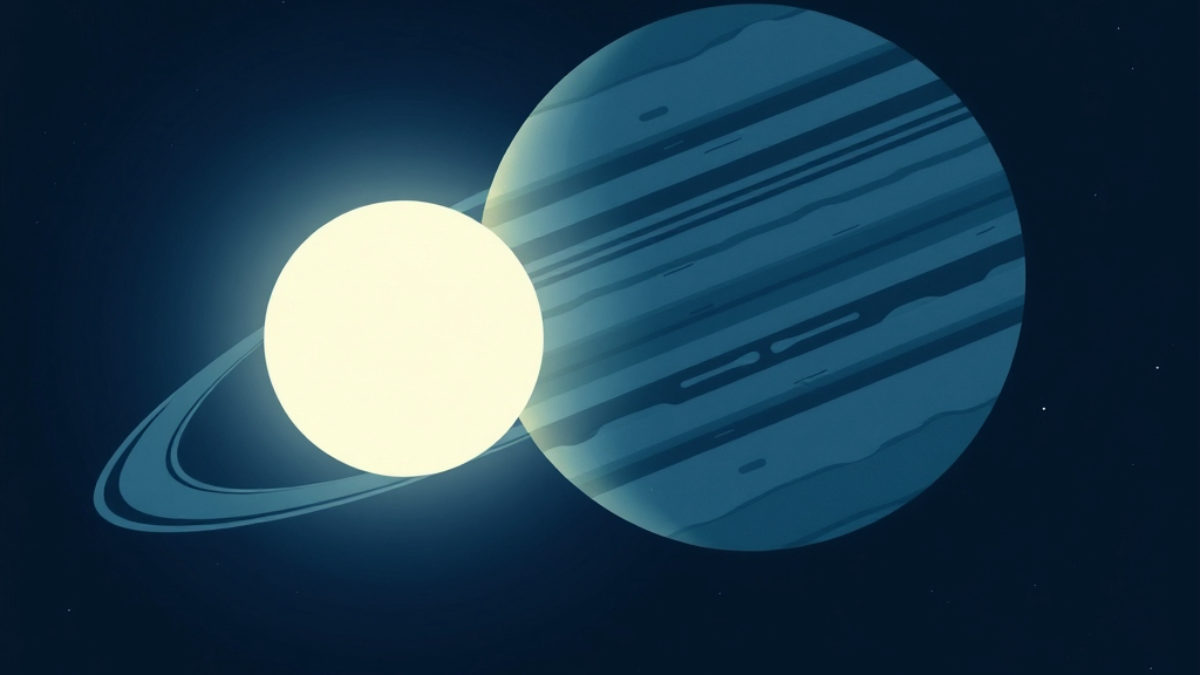
An international group of astronomers has discovered signs of the existence of a second-generation planet near the white dwarf HS 0209+0832.
According to researchers, the gas giant is comparable in size to Jupiter and makes a complete revolution around the star in approximately 4.4 Earth days. The star system itself is located approximately 790 light-years from Earth. The fluctuations in brightness and periodicity of the object's orbit were recorded using the NASA TESS space telescope.
The key evidence for the scenario of repeated planet formation was the analysis of the atmosphere of the white dwarf. It revealed anomalously high concentrations of heavy elements - zinc, copper, and niobium. The content of some of them is approximately a thousand times higher than the solar indicators. These elements are formed as a result of nuclear reactions at the late stages of a star's life, before the ejection of the outer shells.
Currently, the white dwarf is gradually pulling in and absorbing the planet's substance, which is undergoing intense radiation. Astronomers suggest that the HS 0209+0832 system could previously have been a binary system: the gravity of the second star would have allowed the ejected substance to be retained and a disk to be formed for the birth of a new world.
Sources
- iXBT.com: Ученые нашли «планету-феникс», возникшую из останков погибшей звезды media outlet
- N + 1: Белый карлик обрел кандидата в экзопланету второго поколения media outlet
- 3DNews: Космический феникс: найдена первая вероятная планета второго поколения — она родилась из останков собственной звезды media outlet
- Hi-Tech Mail: Планета-феникс могла родиться из останков погибшей звезды media outlet
This article was prepared with the help of AI and translated from the Russian original. Spotted an error — let us know.
Published 7 October 2026, 11:02 · No updates · Russian original




Comments on this story live under its post in our Telegram channel. Comment on Telegram