CERR presents decarbonization scenarios for Uzbekistan through 2050
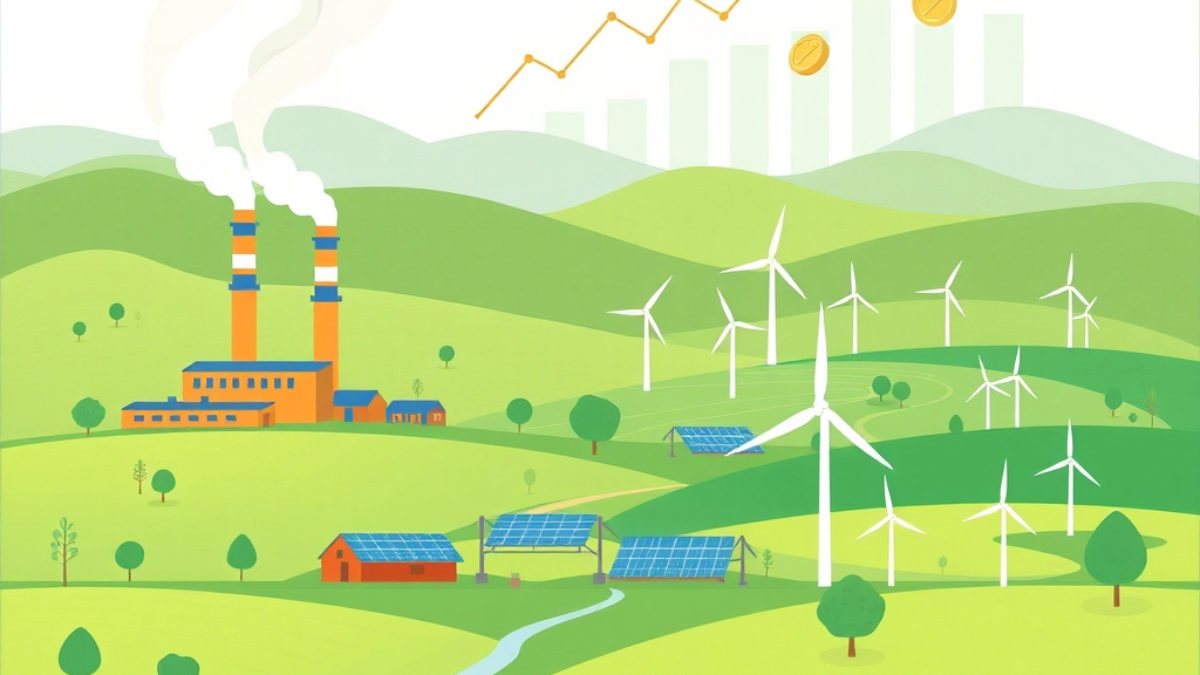
An expert team from the Center for Economic Research and Reforms (CERR) presented long-term scenarios for reducing greenhouse gas emissions in Uzbekistan at a workshop. Participants discussed funding sources for the transition to a low-carbon economy.
The study by the CERR team, led by Abdurashid Bozorov, was conducted with the support of the French Development Agency (AFD), with methodological assistance provided by the Institute for Sustainable Development and International Relations (IDDRI) and the Deep Decarbonization Pathways (DDP) network. The calculations are based on the Pathways Designer model, which assesses how scenarios in energy, industry, transport, construction, and other sectors will affect emissions through 2050 and beyond. Development of the model began in 2025 with the support of the OECD under the SIPA project, and in 2026 the assessment for the first time incorporated the agriculture, forestry, and other land use (AFOLU) sector. The study relies on national statistics and the country's strategic documents.
According to the updated nationally determined contribution (NDC 3.0), Uzbekistan aims to reduce greenhouse gas emissions per unit of GDP by 50% relative to 2010 levels by 2035. Under the document, emission reduction measures require $33.7 billion by 2030 and nearly $70 billion by 2035. The funding shortfall through 2030 stands at $9.5 billion.
Experts from the Institute for Climate Economics (I4CE) demonstrated the LTS Dashboard, a tool for calculating the investment needs of low-carbon strategies, and participants discussed its potential adaptation to Uzbekistan's conditions. Discussions also covered public and private financing, green bonds, public-private partnerships, and international climate funds. Representatives of the Ministry of Economy and Finance attended the workshop.
What it means
According to NDC 3.0, Uzbekistan aims to cut greenhouse gas emissions per unit of GDP in half—by 50% compared to 2010 levels—by 2035. Emission reduction measures require $33.7 billion by 2030 and nearly $70 billion by 2035, with a $9.5 billion deficit through 2030.
Sources
- UzDaily: В ЦЭИР обсудили финансирование декарбонизации экономики Узбекистана media outlet
- Review.uz: В ЦЭИР обсудили финансирование декарбонизации экономики Узбекистана media outlet
This article was prepared with the help of AI and translated from the Russian original. Spotted an error — let us know.
Published 28 October 2026, 09:02 · No updates · Russian original


Comments on this story live under its post in our Telegram channel. Comment on Telegram