BepiColombo prepares to enter Mercury's orbit after eight-year flight
The European-Japanese spacecraft BepiColombo is scheduled to decelerate near Mercury and enter the planet's orbit on November 21, having completed a journey of nearly 10 billion km. The mission is run by the European Space Agency (ESA) and the Japan Aerospace Exploration Agency (JAXA).
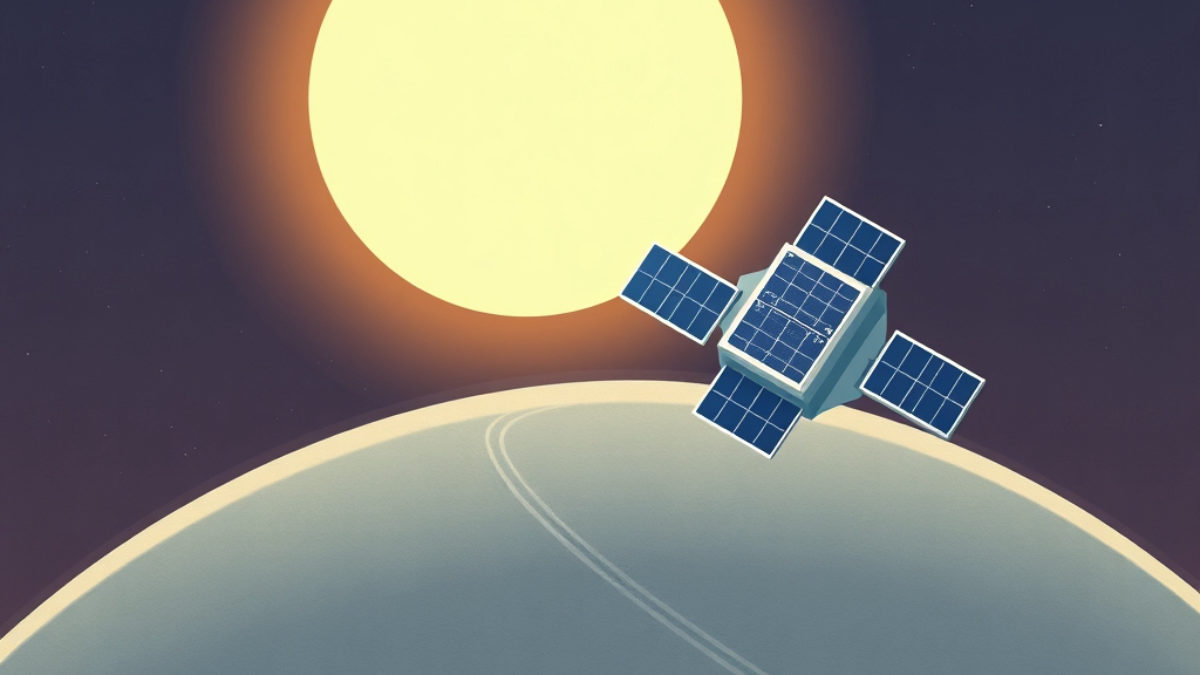
According to the ESA, four engines of the European orbiter will be engaged for deceleration. Initially, the stack of two probes will find itself in an elongated orbit at an altitude of approximately 590 to 11,640 km above the surface. Since the signal between the control centre and the spacecraft travels with a delay, specialists cannot direct all operations in real time, and an error during the manoeuvre could jeopardize orbital insertion.
BepiColombo was launched on October 20, 2018, from the Kourou spaceport in French Guiana. To shed speed, it performed nine gravity assist flybys: one past Earth, two past Venus, and six past Mercury. The spacecraft was originally expected to reach the planet in December 2025. In 2024, a glitch in the electrical power system prevented the engines from operating at full capacity, forcing engineers to calculate a new trajectory. The scientific objectives, however, remained unchanged.
The mission comprises two spacecraft. The European Mercury Planetary Orbiter (MPO) carries 11 instruments designed to study the planet's surface, composition, and exosphere. The Japanese Mercury Magnetospheric Orbiter (Mio) will investigate the magnetic field, magnetosphere, and solar wind. According to the ESA schedule, the probes will separate on December 9–10, 2026. The MPO will enter its operational orbit in March 2027, with the scientific program beginning in April. The nominal mission is designed to last approximately one Earth year.
As iXBT.com reports, the MIXS spectrometer aboard the MPO observed the Crab Nebula for 39 hours in September. The instrument's angular resolution proved to be better than during the last laboratory test in 2015, and no radiation damage was detected. Prior to BepiColombo, only the American Messenger spacecraft had entered Mercury's orbit, back in 2011.
What it means
The probes will separate on December 9–10, 2026, with full-fledged scientific observations slated for April 2027. The primary mission will last about an Earth year and may be extended if the condition of the spacecraft and remaining fuel supplies permit.
Sources
- Anhor.uz: Космический аппарат BepiColombo достигнет Меркурия после восьми лет полёта media outlet
- iXBT.com: 21 ноября gосле восьми лет пути BepiColombo выйдет на орбиту Меркурия — рентгеновский телескоп уже получил первые изображение далёкого космического объекта и успешно прошёл ключевые проверки media outlet
- 3DNews: Восемь лет и девять гравитационных манёвров — BepiColombo выходит на орбиту Меркурия media outlet
This article was prepared with the help of AI and translated from the Russian original. Spotted an error — let us know.
Published 21 November 2026, 20:32 · No updates · Russian original




Comments on this story live under its post in our Telegram channel. Comment on Telegram