Voyager 1 moves one light-day away from Earth
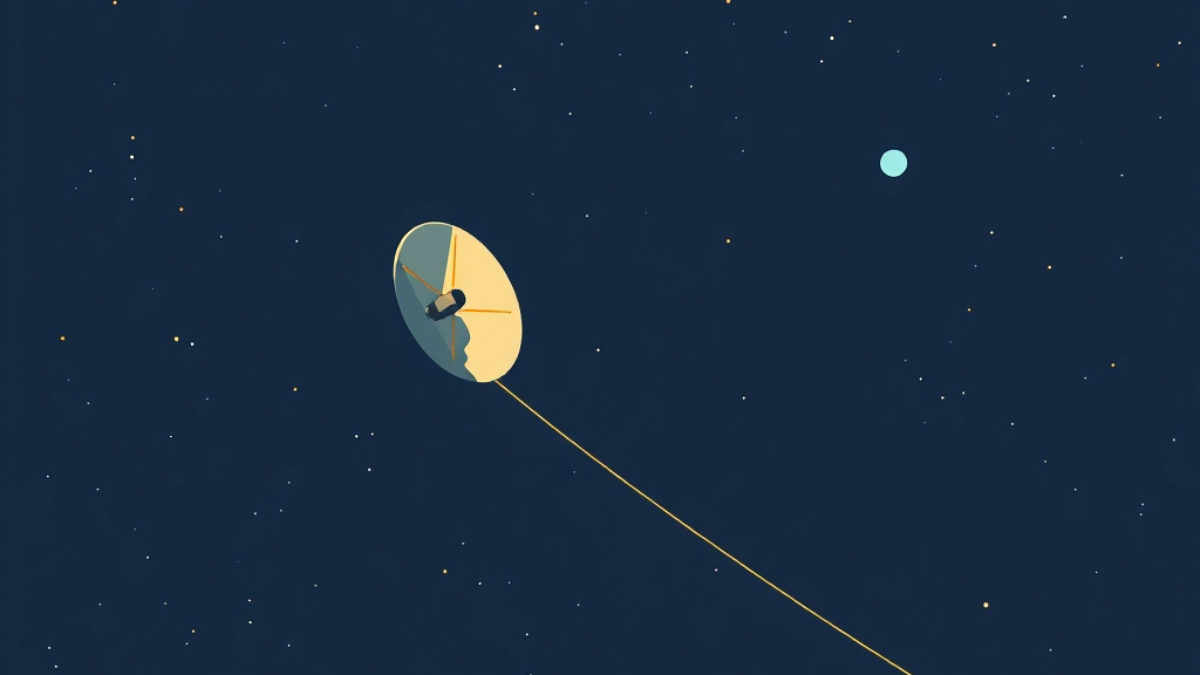
NASA's Voyager 1 probe reached a distance of one light-day from Earth on November 18, 2026. No human-made object has ever traveled so far before.
According to NASA calculations, at the moment of passing this mark, the probe was 25.902 billion km away from our planet. The agency indicated the exact time: 5:16:07 a.m. US Eastern Time. A light-day is the distance that light travels in 24 hours. Radio signals propagate at the same speed, so a command from Earth takes a full day to reach the spacecraft, and the entire messaging round trip takes about 48 hours.
Voyager 1 was launched on September 5, 1977, from Cape Canaveral, Florida. Its twin, Voyager 2, was launched earlier, on August 20 of the same year, but followed a different trajectory toward Uranus and Neptune and will not reach such a distance until November 2035. The first probe is currently flying at a speed of about 61,000 km/h.
The spacecraft is powered by three plutonium-238 radioisotope thermoelectric generators. Their power output decreases by about 4 W annually, prompting engineers to gradually shut down non-essential equipment. Two scientific instruments continue to operate on board: a magnetometer and a plasma wave instrument. In September 2026, the team simultaneously turned off three devices, replacing them with more economical ones, and in October NASA reported a temporary loss of communication with the probe, with the signal returning after 48 hours.
Sources
- Hi-Tech Mail: Зонд «Вояджер-1» преодолеет световые сутки 18 ноября media outlet
- Хабр: Вояджер-1 прямо сейчас удалился от нас на 1 световой год media outlet
- iXBT.com: «Вояджер-1» сегодня достигнет расстояния одного светового дня от Земли media outlet
- N + 1: «Вояджер-1» удалился от Земли на световой день media outlet
This article was prepared with the help of AI and translated from the Russian original. Spotted an error — let us know.
Published 18 November 2026, 18:46 · No updates · Russian original



Comments on this story live under its post in our Telegram channel. Comment on Telegram